Startup Branding Tips for UAE Founders
2026 Guide
There is a specific moment almost every UAE founder hits: the product is ready, the funding round is close and someone on the team asks "what do we actually look like?" and the honest answer is a logo someone's cousin made for free, a color that changes depending on who's posting that week and zero documentation of why any of it exists.
This isn't a small problem. It's the difference between a brand that scales smoothly and one that needs an expensive redo right when the business can least afford the disruption.
The good news is that startup branding doesn't require a massive budget or months of work to get right at the foundational level. It requires doing things in the correct order and avoiding the handful of mistakes that quietly compound into a rebrand eighteen months later.
This guide walks through the practical tips that actually move the needle for UAE founders building a brand in 2026 - not generic branding advice copied from a Western market but what specifically matters in Dubai, Sharjah and Abu Dhabi. If you're building a startup brand right now, our branding services walk through this exact framework.
Tip 1: Define Positioning Before You Touch a Logo
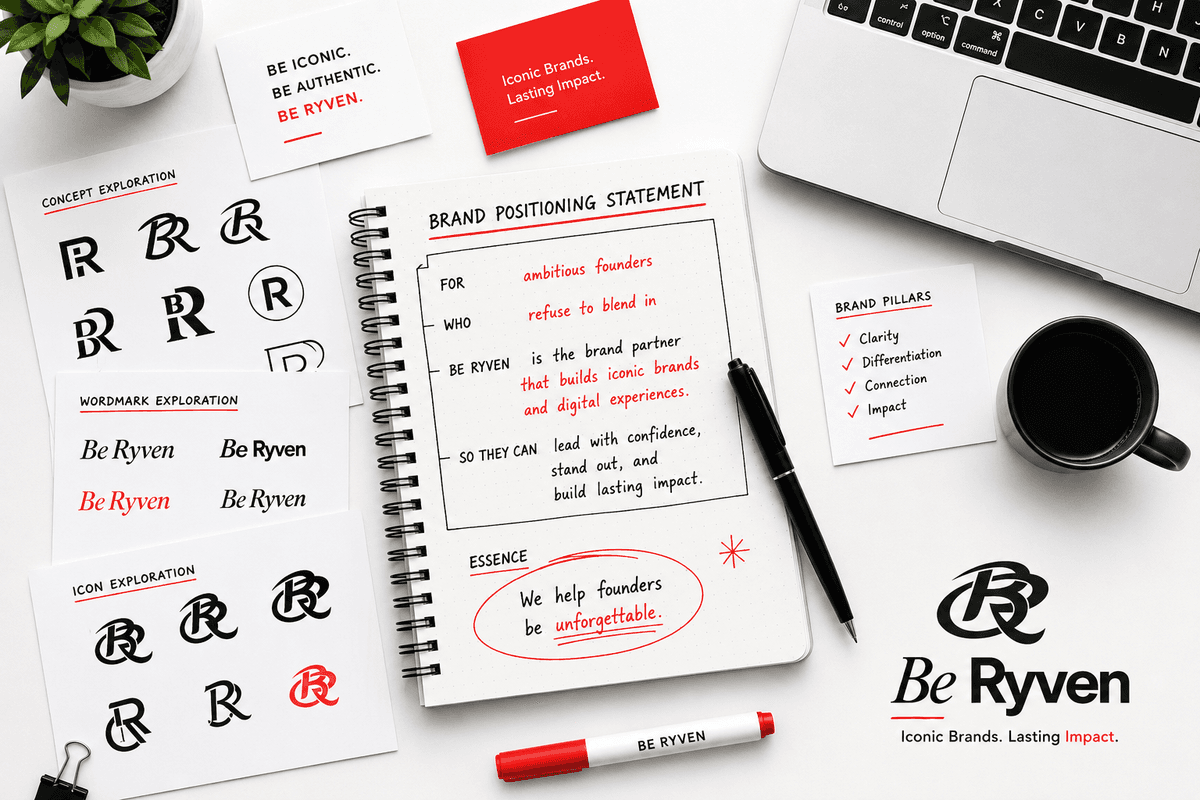
The single most common mistake founders make is reversing the order of operations. They want a logo, so they brief a designer, approve a concept they like and call it branding. The problem is that a logo designed before strategy has nothing to communicate. It might look polished but it can't do the job of explaining who you serve, what makes you different and why anyone should care.
Before any visual work starts, write down - in plain language - who your ideal customer is, what your three closest competitors do differently than you and the one feeling you want someone to walk away with after a single interaction. This sounds simple. Most founders skip it anyway, because it's uncomfortable to answer honestly. Do it before the design brief, not after.
Tip 2: Plan for Arabic and English From Day One
This is the tip that gets overlooked most often by founders who built their first product or worked in markets where one language was the default. The UAE operates bilingually and a name, tagline or visual mark that works cleanly in English can become awkward, hard to pronounce or carry an unintended meaning in Arabic - or vice versa.
If your audience includes Arabic speakers, involve that consideration at the naming stage, not as a translation exercise once the English brand is already locked in. Test how your name sounds out loud in both languages. Check whether your visual identity holds together in right-to-left layouts. This is a technical and cultural detail that's far cheaper to address early than to retrofit later.
Tip 3: Build a System, Not Just a Logo
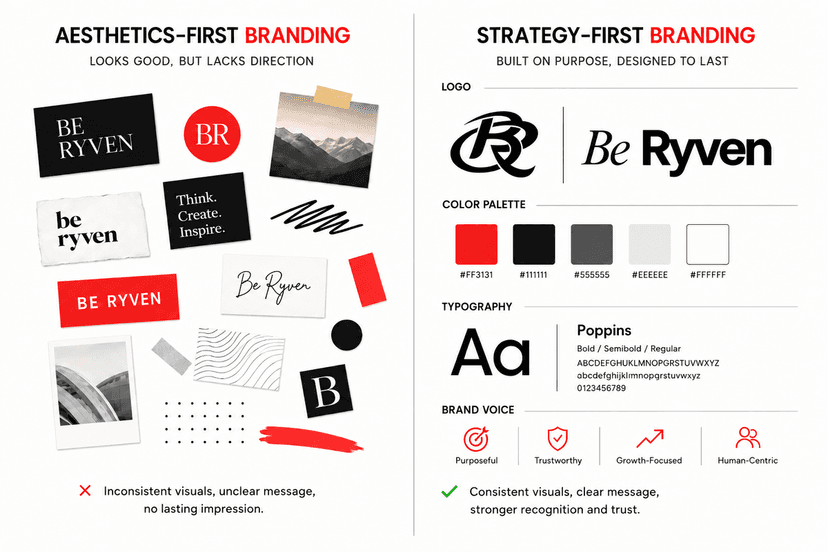
A logo by itself can't carry your brand across a website, an investor deck, a social feed, packaging and a storefront sign. What makes a brand identity actually work is the system underneath the logo: a defined color palette with exact hex and CMYK codes, a typography hierarchy, consistent graphic elements and clear rules for how the logo can and cannot be used.
Without this documented system every new use of your brand becomes a fresh decision made from scratch by whoever's doing it that day. Over months this produces a brand that looks like it was assembled by three different people who never spoke - because that's often exactly what happened. A founder doesn't need a 40-page brand book at launch but even a single-page reference with your colors, fonts and logo rules prevents this drift.
Tip 4: Document Your Tone of Voice, Not Just Your Visuals
Most startups put real effort into how the brand looks and almost none into how it sounds. The result is a brand that reads differently depending on who's writing - formal in the pitch deck, casual on Instagram, vaguely corporate in the email signature with no consistent thread tying it together.
Spend twenty minutes writing down three or four words that describe how your brand should sound, then write two or three example sentences in that voice. This becomes the reference anyone on your team uses - whether they're drafting a tweet, a sales email or a website headline.
Tip 5: Make Your Website Match Your Brand, Not the Other Way Around
A surprisingly common pattern: founders build their website first, with whatever colors and fonts the developer or template defaulted to and only think about branding afterward. This creates a strange situation where the brand identity then has to be reverse-engineered to match a website that was never designed with it in mind.
The better sequence is to lock in your core brand elements - even at a basic level - before your website goes into development. That way your site reinforces your identity from the first page load instead of fighting against it.
Tip 6: Treat Reputation as Part of Your Brand, Not Separate From It
In a market as concentrated as the UAE your brand isn't only what you put on your website, it's also what shows up when someone searches your business name on Google. A polished visual identity paired with an empty or inconsistent online presence sends a mixed signal. Part of building a credible brand in Dubai, Sharjah or Abu Dhabi means making sure your business is easy to find and looks established when someone searches for you locally. This is where local SEO and brand consistency work together - not just when they land on your homepage.
Founder-Led Branding vs. Strategy-Led Branding
| Factor | Founder-Led (DIY/Ad-hoc) | Strategy-Led |
|---|---|---|
| Starting point | Logo concept the founder personally likes | Positioning and audience defined first |
| Bilingual handling | Often an afterthought | Considered from naming stage |
| Consistency | Varies by who's posting | Documented system everyone follows |
| Typical cost and timeline | Cheap now, expensive rebuild later | Higher upfront, holds for years |
| Scalability | Breaks down as team and product grow | Designed to extend across new offerings |
A Realistic Example
Two founders launch fintech startups in Dubai within the same month. Founder A spends a week and a half nailing down positioning and a one-page brand reference before approaching a designer - colors, fonts, logo usage rules and a short voice guide. Founder B finds a logo they like on a freelance platform, picks a color because it "felt right" and launches.
A year later Founder A has added two new product lines and an Arabic-language version of their app, and the brand extends cleanly across both because the system was built to flex. Founder B is now explaining to a new hire why the brand looks different on the website than it does on the App Store listing, and budgeting for a rebrand that could have been avoided with a week of upfront work.
Actionable Takeaways
- •Write your positioning statement before briefing any designer - one sentence on who you serve and what makes you different
- •Involve Arabic consideration at the naming and visual stage, not as a translation step afterward
- •Document your colors, fonts, and basic logo rules on a single page even before you can afford a full brand guideline
- •Write down your tone of voice so it doesn't shift depending on who's posting that day
- •Lock in your core brand elements before your website build starts so the two reinforce each other
- •Make sure your local online presence - not just your visuals - reflects the same level of professionalism as your brand
Frequently Asked Questions
Clear answers to help you make a confident decision.
Define your positioning - who you serve and what makes you different - before any visual design work begins. A logo or color palette created without this foundation has nothing real to communicate and often needs to be redone once the business has grown.